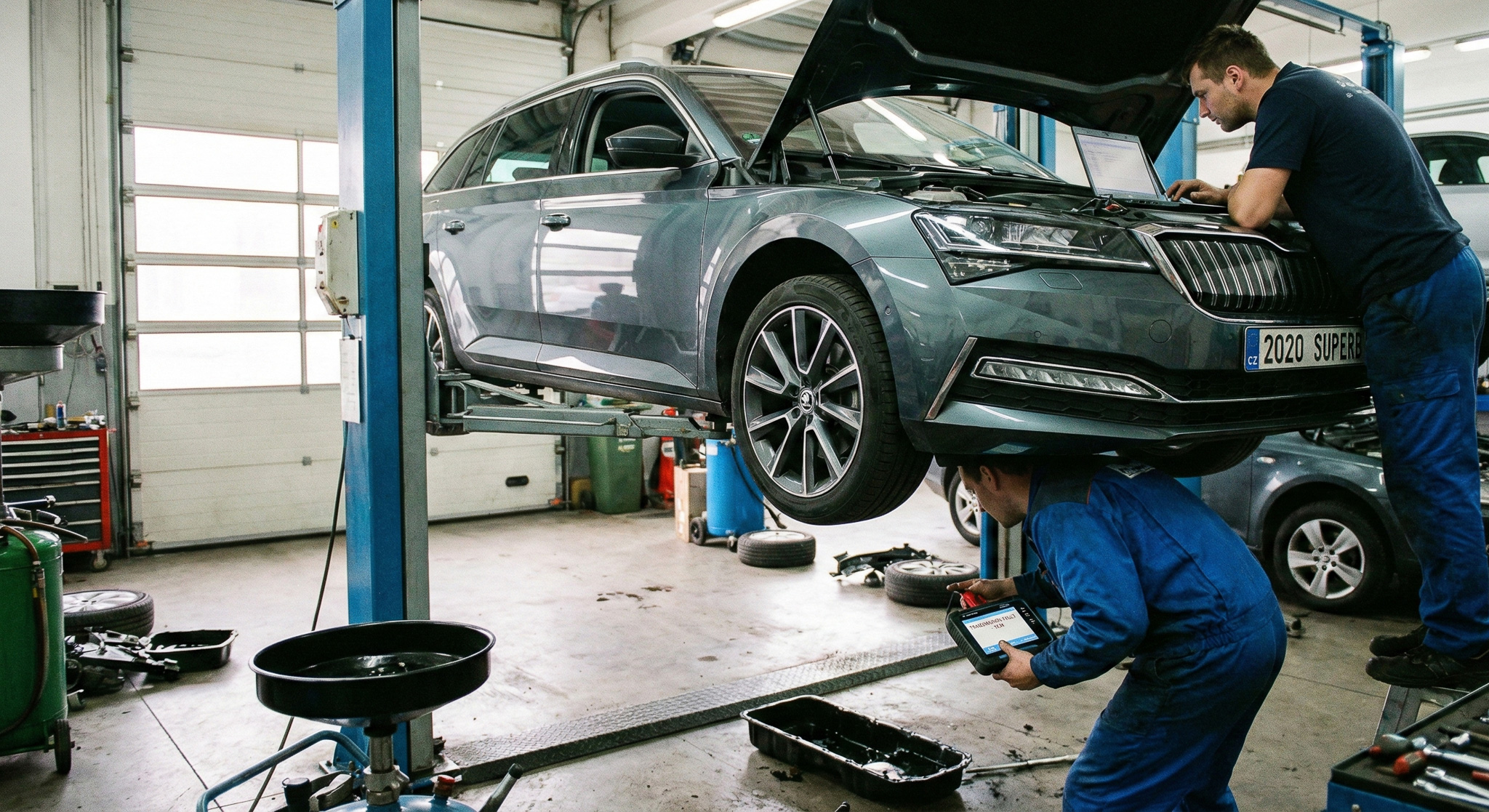

Transmission Troubles—How Carmedic AI Diagnosed a Jerky 2020 SKODA Superb
Every driver knows the feeling: that sudden sinking sensation in your stomach when your car makes a noise it shouldn't. It’s the dreaded moment of uncertainty. Is it a quick, inexpensive fix, or are you looking at a repair bill that rivals a mortgage payment?
This anxiety is especially acute when the issue involves the transmission. Recently, a user came to Carmedic AI with a specific, troubling symptom. The prompt was simple but alarming: "So your 2020 SKODA Superb III Hatchback makes a jerking sound when changing gear."
What followed was a prime example of how artificial intelligence is revolutionizing the way we approach vehicle maintenance. Instead of heading to the mechanic blind, the driver used Carmedic AI to generate a comprehensive, data-driven diagnostic report. Let’s break down exactly how the AI analyzed the symptoms, weighed the probabilities, and delivered actionable insights.
The Problem: The "Jerk" and the Clunk
The vehicle in question, a 2020 SKODA Superb III Hatchback, is renowned for its smooth ride and refined engineering. Usually equipped with a sophisticated automatic or dual-clutch transmission (DSG), gear shifts should be virtually imperceptible.
However, the owner reported a distinct, harsh jerking sensation accompanied by a noise during gear transitions. In modern transmissions, this symptom is a massive red flag. It indicates a disruption in the seamless handoff of power from the engine to the wheels. But a "jerk" is a symptom, not a root cause. The underlying culprit could be anything from outdated software to catastrophic mechanical failure.
To bridge the gap between symptom and solution, the driver turned to Carmedic AI.
The Carmedic AI Diagnostic Process
Carmedic AI doesn't just guess; it relies on vast databases of automotive repair history, technical service bulletins (TSBs), and mechanical engineering principles to cross-reference symptoms with specific vehicle models.
Upon receiving the input regarding the 2020 SKODA Superb, the AI rapidly filtered through thousands of potential drivetrain issues. It evaluated the make, model year, and the specific nature of the complaint to generate a prioritized list of potential causes.
The tool assigns two critical metrics to each potential issue:
Here is the exact breakdown Carmedic AI provided for this case:
Deep Dive: Unpacking the AI's Top Suspects
Carmedic AI doesn't just hand over a list; it explains why it suspects these issues. Let's look at the detailed breakdown the AI provided for the two most likely culprits.
1. Transmission Fluid Level or Quality (85% Confidence)
The AI's Detail: “The transmission fluid is crucial for the smooth operation of an automatic transmission. If the fluid level is low, it can cause the transmission to slip or shift harshly. Additionally, if the fluid is old or contaminated, it may not provide the necessary lubrication and cooling, leading to sluggish and jerky gear changes. Regular checks and maintenance of the transmission fluid can prevent these issues.”
Why it makes sense: This is the most common and, thankfully, one of the most straightforward fixes. Transmission fluid acts as a hydraulic fluid, a lubricant, and a coolant all at once. Inside a modern transmission, hydraulic pressure is what actually executes the gear changes. If the fluid is low due to a leak, or if it has degraded and lost its viscosity, the system cannot build the precise pressure required to engage the gears smoothly. The result is a delayed engagement followed by a sudden, harsh "jerk" as the gear finally slams into place. Carmedic AI correctly flagged this as the most probable cause (85%) with a medium severity, as catching it early usually requires just a fluid flush and filter change.
2. Transmission Control Module (TCM) Issues (75% Confidence)
The AI's Detail: “The Transmission Control Module is responsible for managing the gear shifts in an automatic transmission. If there is a fault in the TCM, it can lead to incorrect or delayed gear changes, causing the vehicle to jerk or make noises during shifts. This issue can be diagnosed through specialized diagnostic tools that can read the TCM.”
Why it makes sense: If the transmission fluid is the lifeblood, the TCM is the brain. It relies on sensors tracking vehicle speed, engine load, throttle position, and fluid temperature to decide exactly when and how firmly to shift. If a sensor goes bad, or if the TCM itself is failing, it sends incorrect electrical signals to the transmission's solenoids. The transmission is essentially being told to shift at the wrong time or with the wrong amount of hydraulic pressure, resulting in a violent jerk. Carmedic AI rightly classified this as a "High" severity issue, as ignoring a faulty TCM can quickly destroy the mechanical components of the transmission.
3. The Remaining Suspects: Mechanical Wear and Software
The AI also identified three other highly relevant possibilities:
The Verdict: Empowering the Driver
Before tools like Carmedic AI existed, a driver with a jerking SKODA Superb would have to rely entirely on the mechanic's initial assessment—which could range from a $150 fluid change to a $4,000 transmission rebuild.
By running the symptoms through the AI, this driver is now empowered. They know to ask the mechanic to check the simple things first: "Can we check the transmission fluid level and condition before we look at anything else? And if that's fine, can we pull the codes from the TCM?"
This case study highlights the true value of AI in automotive repair. It doesn't replace the mechanic turning the wrench, but it democratizes the diagnostic data. It removes the mystery, lowers consumer anxiety, and ensures that the conversation at the repair shop starts with facts, probabilities, and logical deductions.
For the owner of this SKODA Superb, a terrifying mechanical clunk was transformed into a manageable, step-by-step action plan—all thanks to the analytical power of Carmedic AI.

Diagnoza auto AI
CarMedic AI© . All Rights Reserved.